

GALLERY


FOREST EDGES
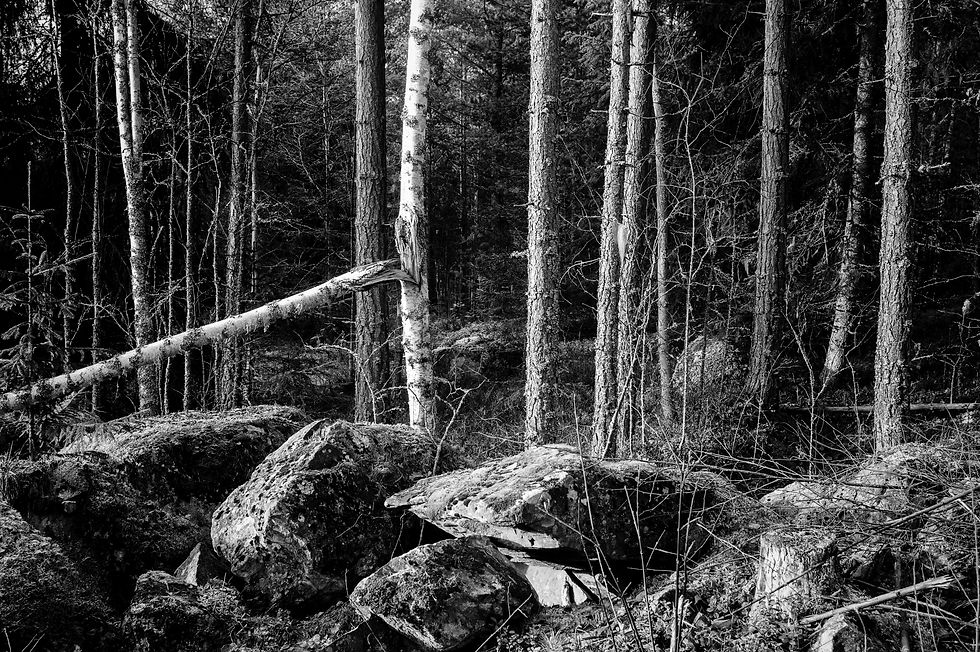
IN WOODLANDS SAWANT PHOTOGRAPHY LEADS US INTO the quiet margins between city and nature, capturing spaces where trees gather, shadows deepen, and the forest’s presence feels soft but constant. These are not grand wildernesses, but places of transition — green pockets at the edges of urban life, paths where nature bleeds into human geography, and small wooded enclaves that speak of both solitude and memory.
Through these images, Sawant draws on the tradition of landscape photography while transforming it: he employs a restrained, contemplative gaze that evokes the stillness of minimalist landscape art and the light sensitivity of Scandinavian photographers who meditate on place. His work resonates with earlier practitioners like Per Bak Jensen, whose photographs of desolate natural and semi-natural environments convey a quiet metaphysical weight, and with contemporary figures who regard the natural world’s borderlands as rich with meaning rather than empty spaces.
Artistically, Woodlands is a study in atmosphere. The framing is deliberate; branches, trunks, understory plants, glimpses of sky, and muted ground cover are woven together to construct a visual tapestry that feels both intimate and open. Light filters through leaves, creating subtle patterns of illumination and shade, while compositions often emphasize negative space, encouraging reflection rather than narrative drama.
In today’s photographic landscape — where ecological awareness and urban expansion coexist as urgent themes — Sawant’s forested edges feel timely. These woodlands are neither refuge nor monument; they are practical, sometimes fragmented, and deeply human in their intersection with development. His photographs invite us to pause and consider how these modest groves sustain memory, habitat, and continuity, even as the world around them changes.
Text generated by ChatGPT doing an analysis of the Sawant Photography web page.